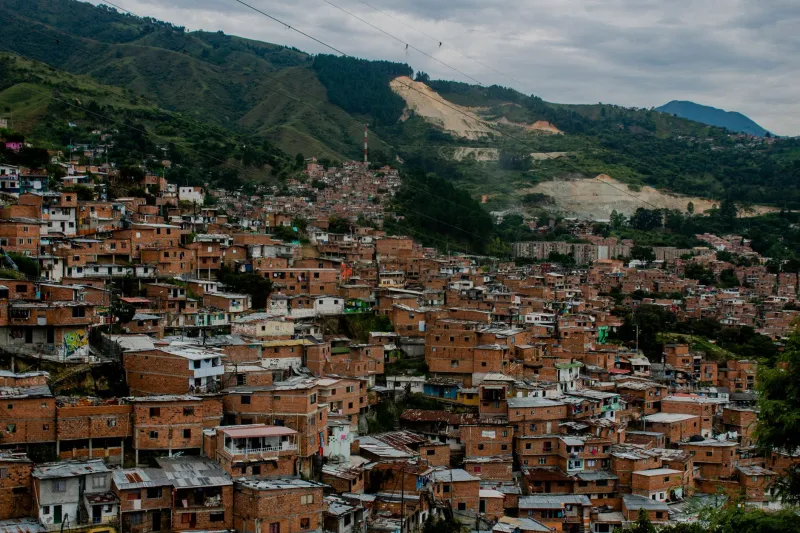
Who Gets to Be Seen: The Festival Power Brokers Shaping Medellín's Global Cinema Story
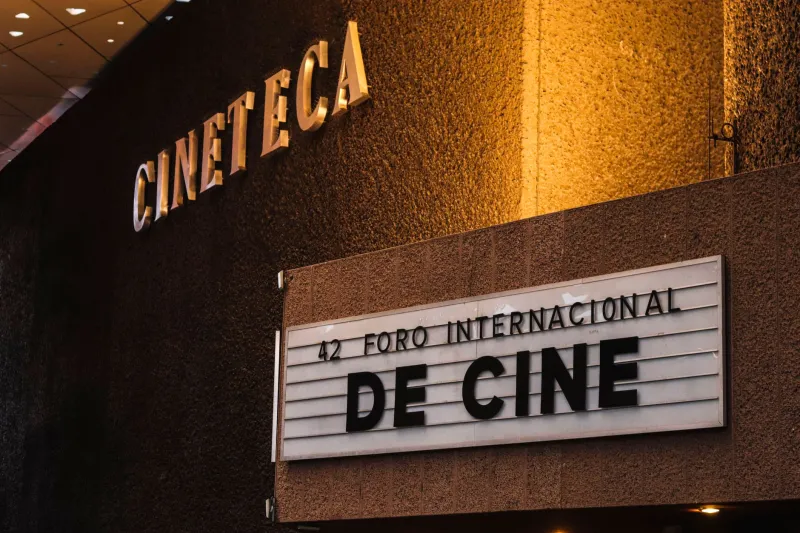
Every year, Colombian filmmakers pack hard drives, rehearse their elevator pitches in English, and fly to cities they probably can't afford to stay in — all for a shot at a festival slot that might last ninety minutes but could define their career forever. The dream is universal. The math, however, is brutal.
Sundance receives somewhere north of 15,000 submissions annually. Cannes gets more. Toronto, Berlin, Tribeca — same story. The number of slots available for Latin American cinema, specifically for films rooted in places like Medellín, remains stubbornly small. And the people deciding which stories make the cut? They're mostly not from Medellín.
That's not a conspiracy. It's a structure. And structures have consequences.
The Programmer Problem
Film festival programmers are among the most influential — and least scrutinized — figures in global cinema. They don't direct films. They don't fund them. They curate them. And curation, at this scale, is an act of enormous cultural power.
Most of the major international festivals that carry real market weight operate with programming teams that skew heavily toward European and North American perspectives. That's not a new observation, but it keeps mattering in new ways. When a programmer at a prestigious US festival has limited familiarity with the cultural specificity of Medellín — its neighborhoods, its class dynamics, its post-conflict texture — they're often evaluating a film against a template they've absorbed from previous films about the city. Which means the films most likely to get selected are the ones that most closely resemble what already got selected before.
It's a feedback loop dressed up as taste.
Filmmakers from Medellín who've navigated this circuit will tell you, usually off the record, that there's an unofficial checklist. Certain aesthetics read as "arthouse." Certain subjects — poverty, violence, resilience — scan as serious and therefore fundable. Films that don't fit those grooves, no matter how formally inventive or culturally urgent, tend to bounce.
What the Market Wants vs. What the City Has
Here's the uncomfortable tension at the center of this whole conversation: international film festivals are not purely artistic institutions. They're also markets. Cannes has its Marché du Film. Toronto has its industry days. Sundance has its acquisition feeding frenzy. The line between celebrating cinema and selling it has always been blurry, but it's gotten blurrier.
For Colombian filmmakers, this means that getting into a major festival is only part of the equation. The real prize is the distributor conversation that follows. And distributors — particularly US distributors who could bring a Medellín story to American audiences — are making bets based on perceived marketability. That perception is still shaped, more than anyone likes to admit, by how familiar a film feels.
Films that engage with Medellín's complexity in ways that don't fit a recognizable genre or emotional arc face a steeper climb. A slow-burn family drama set in Laureles? A formally experimental piece about displacement in the comunas? These aren't impossible sells, but they require programmers and distributors willing to do the interpretive work — willing to meet a film on its own terms rather than slotting it into a pre-approved category.
Not everyone is willing to do that work. And the ones who aren't tend to hold the keys.
The Co-Production Workaround — and Its Costs
Savvy Colombian filmmakers have figured out one reliable way to improve their festival odds: attach a European co-producer. A French or Spanish co-production credit can significantly raise a film's profile with certain festival committees. It signals that the project has already passed through a layer of international validation.
But this strategy comes with its own distortions. Co-production deals often come with creative expectations, however subtle. A Spanish production house bringing money to a Medellín-set film has aesthetic preferences, market assumptions, and sometimes a very specific idea of what a "Colombian story" should look like for European consumption. The collaboration can be genuinely generative. It can also nudge a film away from its own center of gravity.
The directors who've talked openly about this dynamic describe it as a negotiation that never fully ends. You're grateful for the resources. You're also constantly asking yourself whose story this is becoming.
The Sundance Pipeline and What It Misses
For US audiences, Sundance is often the primary on-ramp to international cinema. If a Latin American film breaks through at Park City, it has a real shot at theatrical distribution, streaming deals, and the kind of critical attention that builds a filmmaker's reputation in this market.
Medellín-connected films have had genuine Sundance moments. But the pipeline is narrow and inconsistent. The festival's commitment to international voices has grown over the years — its World Cinema program is legitimately expansive — but the internal logic of what gets elevated within that program still reflects particular institutional biases.
Films that arrive with buzz from European festivals already attached tend to do better. Films with English-language press materials and a US publicist do better. Films whose directors can afford to attend do better. None of these advantages have anything to do with the quality of the storytelling. They're just advantages.
For filmmakers in Medellín who are working without those structural supports, the festival circuit can feel less like a launching pad and more like a wall with a very small door.
Cracks in the Wall
None of this means the system is static. It isn't. The rise of streaming has created parallel paths to visibility that didn't exist fifteen years ago. A film that gets passed over by every major festival can still find its audience through Netflix, MUBI, or even a well-placed YouTube release. The gatekeepers' grip has loosened — not disappeared, but loosened.
Medellín-based film organizations and collectives have also gotten smarter about building regional festival infrastructure, creating platforms that don't depend on European or US validation to generate real cultural impact. That's genuinely meaningful. A film seen and celebrated in Medellín, in Colombia, across Latin America — that's not a consolation prize. That's an audience.
But the honest truth is that international festival visibility still carries a particular kind of cultural currency. It shapes which films get written about in English-language press. It shapes which directors get invited to speak at industry events. It shapes, ultimately, which stories about Medellín become part of the global conversation about what the city is and what it means.
The Question That Doesn't Go Away
Film festivals, at their best, are acts of cultural translation — they take stories from one context and help audiences in another context actually receive them. That's a beautiful function. It's also a function that requires the people doing the translating to approach unfamiliar work with genuine curiosity rather than comfortable pattern-matching.
The filmmakers coming out of Medellín right now are making work that doesn't always fit the templates. They're telling stories about a city that has outgrown its own mythology, stories that require audiences to sit with ambiguity rather than resolution. That's exactly the kind of cinema that the festival circuit claims to champion.
Whether the circuit actually makes room for it — that's the question worth asking, loudly, every single year.