Lost Voices: What Happens to a Film's Soul When You Swap the Accent
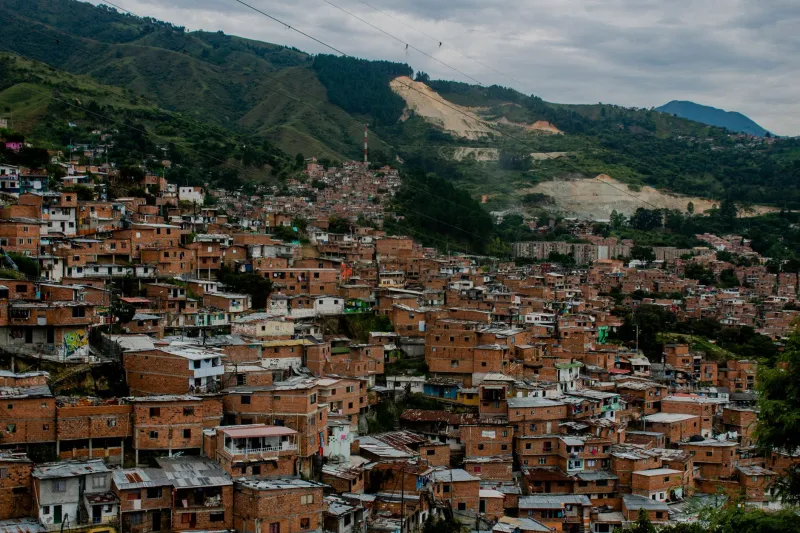
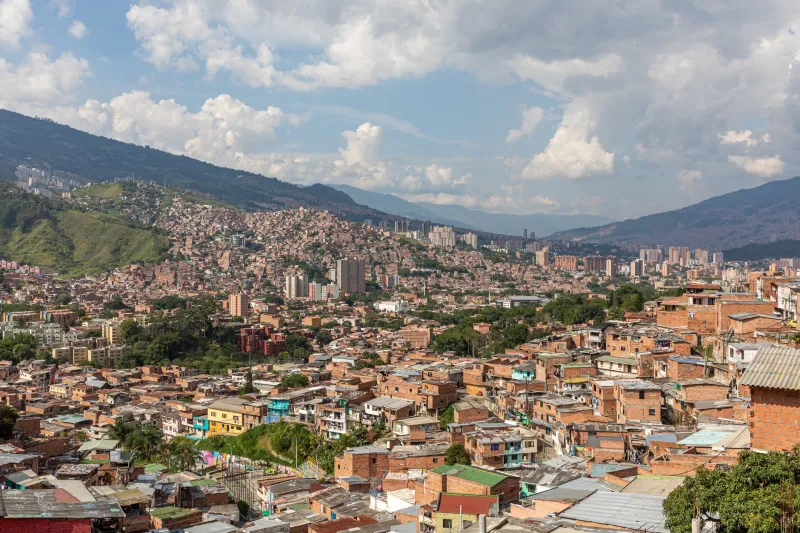
There's a moment in almost every great Colombian film where a character says something so specific to their world — a slang term from a Medellín barrio, a rhythm of speech that carries decades of working-class history — that you feel it before you fully understand it. That feeling is the whole point. And when a dubbing studio in Burbank swaps that voice out for a generic American accent reading from a translated script, that feeling disappears entirely. Not softened. Gone.
Dubbing has long been sold to US audiences as accessibility — a way to lower the barrier of entry for foreign-language cinema. But accessibility built on erasure isn't really access at all. It's a substitution. And the Latin American filmmakers who have spent the last decade fighting to tell authentic stories about cities like Medellín deserve better than to have the sonic architecture of their work quietly dismantled before it ever reaches American living rooms.
The Voice Is the Performance
Let's start with something that gets overlooked constantly in these conversations: acting is not just facial expression and physical movement. A significant portion of a performer's craft lives in the voice. The hesitation before a word. The way a sentence climbs and then suddenly drops. The specific texture of grief or humor or rage that a particular regional accent carries.
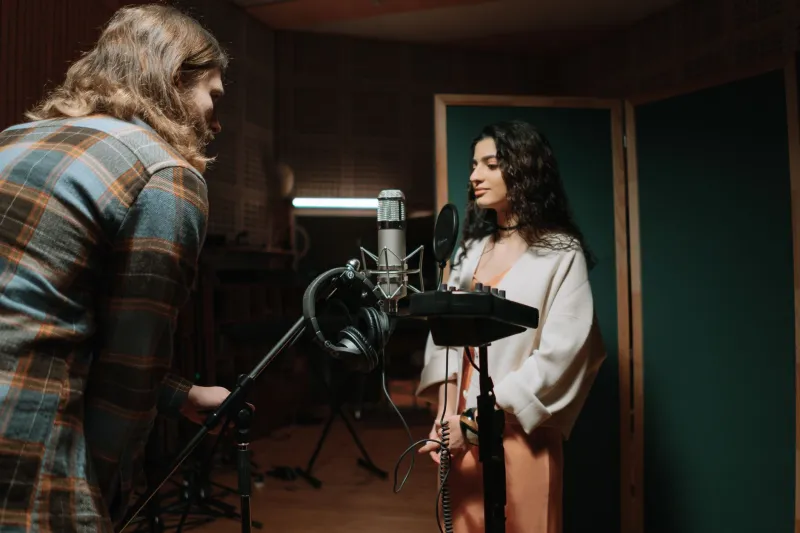
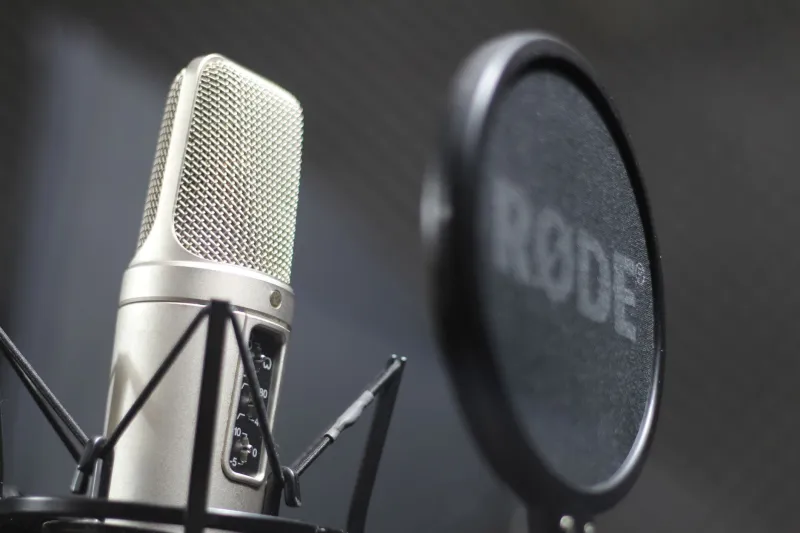
When Colombian actress Natalia Reyes performs a scene, her Bogotá-inflected Spanish isn't incidental to the character — it is the character. When a sound designer in a Latin American production carefully layers ambient street noise from a specific Medellín neighborhood beneath a dialogue track, that sonic environment is doing narrative work. Dubbing bulldozes all of it. The replacement voice actor, working from a script optimized to match lip movements rather than emotional truth, is essentially performing a cover version of someone else's original song. And cover versions, however competent, are rarely the thing you remember.
Sound designers who work in Colombian cinema have been vocal about this frustration for years. The process of building a film's audio landscape — what the industry calls the soundscape — can take months. Dialogue isn't recorded in isolation; it exists in relationship to music, ambient sound, and silence. Dubbing disrupts every one of those relationships simultaneously.
Cultural Nuance Doesn't Translate on a Timeline
Here's the practical problem dubbing studios rarely want to talk about: genuine cultural translation is slow, expensive, and requires expertise that most production pipelines aren't built to accommodate. Subtitling, done well, allows a skilled translator to sit with a line for hours, researching its context, testing different English equivalents, weighing the trade-offs between accuracy and readability. Dubbing requires that same translation to also fit a specific number of syllables, end at a specific moment, and sound naturalistic coming from a voice actor who has probably never visited Colombia.
The result is a kind of linguistic flattening. The rich, layered vernacular of Medellín's streets — a dialect that reflects Indigenous, African, and Spanish colonial history all at once — gets compressed into something that sounds like it could have come from anywhere. Which is, ironically, exactly the opposite of what Medellín's filmmakers are trying to achieve. The entire movement toward authentic local storytelling that has defined Colombian cinema's recent renaissance is predicated on the idea that specificity matters. That Medellín is not interchangeable with Bogotá, or Mexico City, or Miami. Dubbing argues the opposite.
What Subtitles Actually Do
The case for subtitles isn't just about preserving authenticity — though it is absolutely that. It's also about what subtitles ask of an audience, and what that asking produces.
When American viewers watch a subtitled film, they're invited into an act of active engagement. They're not passive consumers receiving a pre-digested product; they're participants in a cross-cultural exchange. Research on audience response consistently shows that viewers who watch subtitled foreign films report stronger emotional connection to characters and higher retention of story details than those watching dubbed versions. The slight cognitive effort of reading while watching appears to deepen investment rather than diminish it.
There's also something worth naming about the politics of who gets asked to do the work of translation. For decades, the default assumption in American entertainment has been that US audiences shouldn't have to adapt — that the product should come to them fully converted, accent-free, and frictionless. That assumption is a form of cultural arrogance, and it's one that a generation of streaming-era viewers has already started to reject. Parasite won the Best Picture Oscar. Squid Game broke Netflix records. Narcos — for all its complicated politics around representation — introduced millions of Americans to Colombian Spanish and they didn't flee the room.
The audience is ready. The industry's habits just haven't caught up.
The Medellín Standard
Filmmakers working in and around Medellín have been particularly clear-eyed about this issue, in part because they've watched their city's story get distorted so many times by outside hands. The dubbing debate isn't abstract for them — it's an extension of a much longer fight over who controls the narrative.
When a director spends three years building a film that captures the specific emotional texture of a Comunas neighborhood, every creative decision is intentional. The casting of local non-professional actors. The choice to record dialogue on location rather than in a studio. The decision to let scenes breathe in silence rather than fill every moment with score. These aren't accidents — they're arguments. Arguments about authenticity, about representation, about whose version of Medellín gets to exist on screen.
Dubbing doesn't just change the language of those arguments. It changes the argument itself. It says: the specificity you fought for is negotiable. The voice you chose is replaceable. The cultural texture you built is less important than making this comfortable for an audience that hasn't decided yet whether they're willing to read.
The Ask Is Small. The Stakes Are Not.
None of this is a call to make Latin American cinema inaccessible. Subtitles are not a hardship — they are, at this point, a standard feature of how millions of Americans consume content every single day. The ask being made here is genuinely modest: trust the original voice. Trust the performance. Trust the audience to meet a film on its own terms rather than demanding the film reshape itself into something more palatable.
Medellín's filmmakers have already done the hard work of telling their city's truth on screen. The least the rest of the distribution chain can do is deliver that truth intact.
Because when you strip the voice, you don't just lose the sound. You lose the story.