Terrain as Character: How Latin American Cinema Turns Landscape Into Story
There's a shot that shows up again and again in films set in Medellín — someone climbing. Maybe it's a kid hauling groceries up a staircase carved into the side of a hill. Maybe it's a young woman on a cable car, watching the city unfold beneath her like a map of everything she's trying to escape or return to. The climb itself is the story. The altitude is the argument.
American audiences are trained to read landscapes as atmosphere — a moody backdrop, a pretty establishing shot before the real action begins. But in Latin American cinema, that instinct will get you lost. Here, the terrain is doing heavy narrative lifting. The mountain isn't behind the story. It is the story.
The Hill Has a Point of View
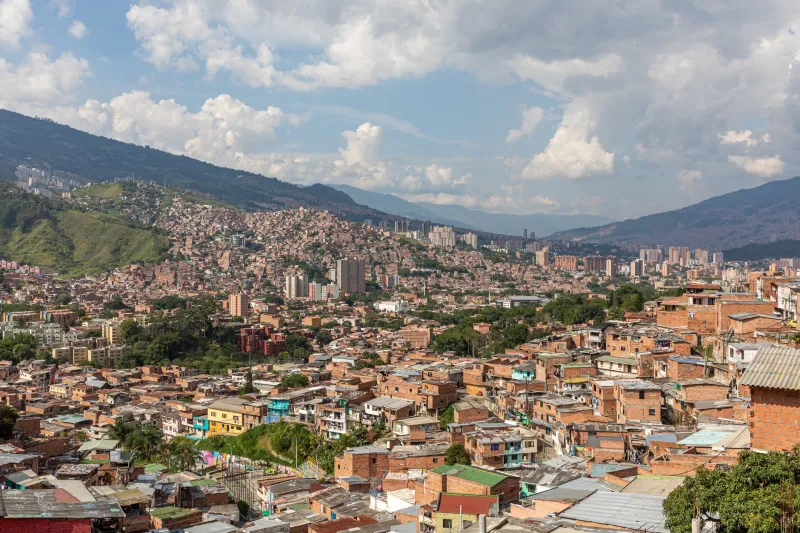
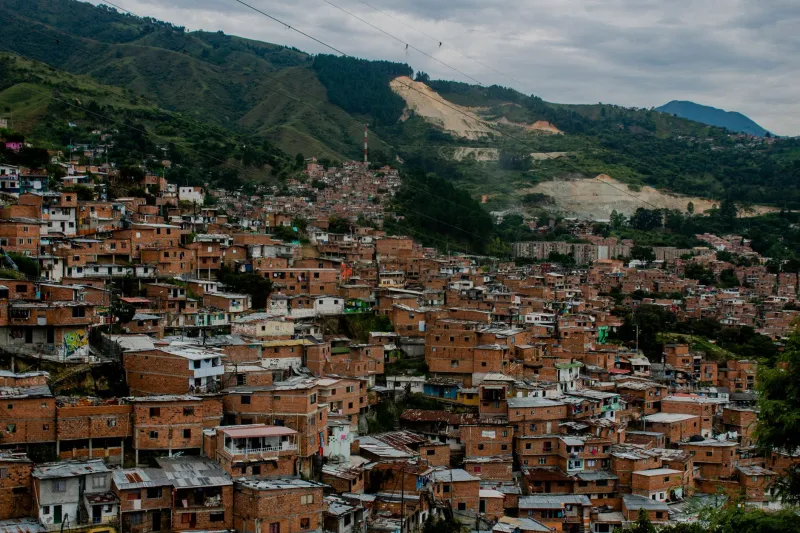
Medellín is a city built in layers, and those layers are social fact as much as geography. The wealthier neighborhoods sit in the valley floor. The comunas — working-class, historically marginalized, historically stigmatized — climb the steep hillsides above. Filmmakers working in and around the city have understood for decades that a camera angle isn't just aesthetic. Looking up at someone or down at someone carries the entire weight of class, aspiration, and power.
When a character in a Medellín-set film descends from the hills toward the city center, that's not just movement. It's a negotiation. When they return uphill, it can read as retreat, or homecoming, or defiance — depending on everything else the film has built around it. The geography makes the metaphor automatic, almost inevitable, which is exactly why skilled directors lean into it rather than smooth it over.
This isn't unique to Medellín, but the city makes it unusually legible. The visual contrast between the valley and the hillsides is stark enough that even a first-time viewer picks up on the spatial tension. You don't need subtitles to understand that the cable car connecting the comunas to the metro system is about more than transit infrastructure.
What the Road Knows That the Character Doesn't
Pull back from the city and into the Colombian countryside, and a different kind of geographic storytelling takes over. Rural highland films — stories set in the coffee-growing regions, the páramos, the winding roads connecting small towns — tend to use landscape as a kind of dramatic irony. The land knows things the characters don't yet.
Think about how often a journey through rural Colombia functions as a slow revelation. A character travels a road they've traveled a hundred times, but the film frames it differently — closer, slower, more attentive — because something is about to change. The landscape hasn't shifted, but the relationship to it has. That's a storytelling technique rooted in deep familiarity with specific terrain. You can't fake that kind of intimacy with a location. You can't Google Street View your way to it.
This is part of what makes so much Latin American cinema feel different from Hollywood productions that occasionally venture into the region. A major studio film might shoot in Colombia and get the visuals right — the lush greens, the dramatic elevation changes, the distinctive architecture — while completely missing the grammar of the place. The landscape becomes wallpaper. Beautiful wallpaper, but passive. Inert.
Learning to Read a New Visual Language
For US audiences, the geography of Latin American cinema represents a genuine literacy challenge — and a rewarding one. We're used to certain landscape codes. The American Southwest means freedom and isolation. The Midwest means decency and stagnation. New York means ambition and anonymity. These are shorthand we've absorbed from a century of Hollywood filmmaking.
Latin American cinema asks you to build new shorthand from scratch, and the films that do it best don't hold your hand through the process. They trust that if they're honest about the specificity of a place, you'll do the work of learning what it means.
That specificity shows up differently across the region. In Mexican cinema, the border itself — the literal line, the desert on either side of it — carries so much accumulated meaning that a single wide shot can compress entire political arguments into one image. In Argentine films, Buenos Aires operates almost like a character with its own psychology, its European-influenced architecture creating a particular tension with stories about identity and belonging. In Brazilian cinema, the favela hillsides rhyme visually with Medellín's comunas in ways that feel intentional even when they're not — geography creating cross-cultural conversation between films that may never have been in dialogue with each other.
The Motorcycle Is Never Just a Motorcycle
Ground-level transportation deserves its own mention here, because it's one of the most consistent geographic storytelling tools in Latin American cinema. The motorcycle, the mule, the bus winding around a mountain curve — these aren't just ways to get a character from point A to point B. They're indicators of access, class, urgency, and freedom.
A character on a motorcycle in a Medellín film moves through the city differently than a character in a car or on foot. The motorcycle can go where cars can't, navigate the narrow uphill paths of the comunas, disappear into traffic. It implies a certain kind of knowledge — of routes, of shortcuts, of how to move through a city that wasn't designed with you in mind. That's character information delivered through geography and vehicle choice simultaneously.
When a rural Colombian film puts a character on a mule navigating a mountain path, it's doing something similar. The pace of the journey — slow, deliberate, subject to the animal's own judgment — creates a rhythm that shapes how you receive everything else happening in the scene. Conversations that happen on that mule path have a different texture than conversations that happen in a kitchen or a town square. The terrain controls the tempo.
What Filmmakers Gain by Staying Specific
There's a commercial logic that pushes filmmakers toward generic locations — places that could be anywhere, that don't require audiences to orient themselves to a specific geography. Latin American cinema, at its best, rejects that logic entirely.
The filmmakers who've built the most compelling work out of Medellín, out of the Colombian highlands, out of the varied landscapes of the continent, have understood that specificity is not a barrier to universal connection. It's the path to it. An audience doesn't need to have climbed a hillside in Medellín to feel what that climb means when a film frames it right. But the film has to be honest about the hill — its steepness, its particular light, its relationship to everything below.
That honesty is what American audiences are increasingly responding to in Latin American cinema. Not the exotic surface, but the specificity underneath it. The sense that this story could only happen here, in this terrain, under this sky.
The landscape isn't the backdrop. It's the first sentence of every story told within it.