When the Voice Dies in Transit: What American Audiences Never Hear in Colombian Films

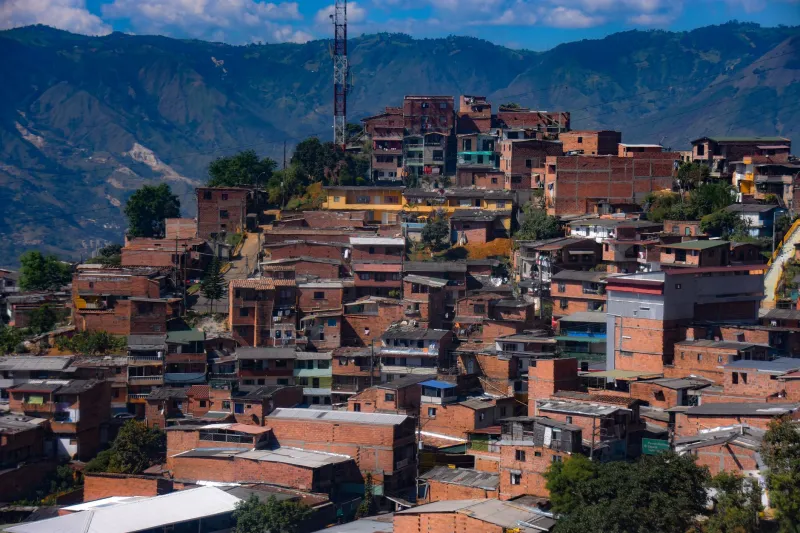
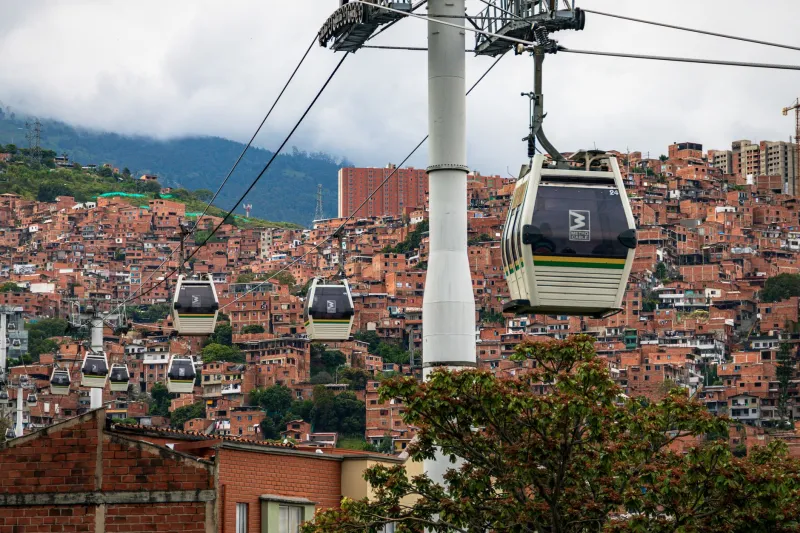
There's a moment in almost every great film set in Medellín — a pause, a breath, the way a character drops into voseo when they're angry or slips into a tender mija when they're scared. It's not just vocabulary. It's geography. It's class. It's a neighborhood, a generation, a wound. And when dubbing replaces that voice with a neutral American accent engineered to move product across multiple markets, that moment — that irreplaceable, specific human moment — simply ceases to exist.
The dubbing debate has been simmering in Latin cinema circles for years, but it's hitting differently now. As streaming platforms pour money into Colombian content and Medellín-centered stories reach wider American audiences than ever before, the question of how those stories arrive matters as much as whether they arrive at all.
The Business Case Nobody Wants to Admit Out Loud
Let's be honest about why dubbing exists: it's not about authenticity. It's about friction reduction. Streaming platforms operate on engagement metrics, and subtitles — for a certain segment of American viewers — represent friction. Drop-off rates, completion percentages, algorithm performance. These are the numbers that drive localization decisions, and dubbed content consistently outperforms subtitled content in certain demographics, particularly on mobile and in households where a second screen is always competing for attention.
One former localization executive at a major streaming platform, speaking on background, put it plainly: "We're not making cultural decisions. We're making retention decisions. If dubbing keeps someone watching through episode three instead of dropping off at episode one, that's the math we're working with."
That math is real. But what it doesn't account for is what the viewer in episode three is actually experiencing — and whether it bears any meaningful relationship to what the filmmaker made.
What a Voice Carries That Words Alone Cannot
Voice acting is its own art form, and skilled dubbing artists work hard to honor source material. That's not the issue. The issue is structural. Colombian Spanish — and Medellín's paisa dialect specifically — carries information that simply cannot be transplanted into English without fundamental loss.
The cadence of paisa speech is musical in a specific way, with rising inflections and a warmth that native speakers identify immediately as regional. When a character in a Medellín-set film speaks, their voice signals not just meaning but origin, status, and belonging. A paisa accent tells you where someone grew up, roughly how much money their family had, whether they're from the comunas or the wealthier hillside neighborhoods. American English dubbing flattens all of that into a single, placeless register.
Director voices on this subject tend to be unambiguous. In interviews across the Latin cinema space, Colombian filmmakers have repeatedly described the experience of watching their work dubbed as something close to estrangement — like watching a stranger perform an imitation of their own memories.
"The voice is the first layer of the character," one Colombian director told an interviewer at a film festival last year. "Before you see the face, before you understand the story, you hear who this person is. Replace that, and you've replaced the person."
The Subtitle Argument and Why It's Winning
Here's what the data and the culture are starting to align on: American audiences are more subtitle-literate than they were five years ago. The Parasite moment — Bong Joon-ho's famous crack about the "one-inch-tall barrier" at the Golden Globes in 2020 — didn't just make headlines. It reflected a real shift in viewing behavior that had already been underway, accelerated by the pandemic and the sheer volume of foreign-language prestige content that platforms had begun commissioning.
Younger American viewers, particularly those in urban markets and college-educated demographics, have largely made their peace with subtitles. Many actively prefer them, citing immersion and authenticity as reasons. For this audience, dubbing doesn't reduce friction — it creates a different kind of friction, the nagging sense that something is off, that the mouths don't quite match the sounds, that the emotion in the room doesn't match the emotion in the voice.
That gap between the lip movement and the dubbed audio isn't just technical. It's a metaphor for the whole problem.
When Localization Becomes Erasure
The most troubling version of the dubbing debate isn't about whether subtitles are better — most people in the industry will privately concede they are, for complex narrative content. The more troubling version is about what happens when localization decisions compound.
Dubbing is rarely the only change made to Colombian films for American distribution. Subtitles, when they exist, often smooth out idioms, strip out culturally specific references, and substitute American equivalents for Colombian ones. A neighborhood name might disappear. A slang term might get replaced with something recognizable but wrong. The cumulative effect of these small decisions is a film that has been quietly sanded down — still watchable, still emotionally legible, but no longer quite itself.
For films about Medellín specifically, this matters in a particular way. The city has spent decades fighting a single, flattening narrative — the cartel story, the Escobar story, the story that American media built and American audiences consumed. The new wave of Colombian cinema is explicitly trying to replace that narrative with something more complicated, more human, more true. When localization decisions strip away the specific textures of Medellín's voice, they risk reinstalling a different kind of flattening — not the violence cliché, but the blandness of content that has been optimized for universal consumption.
What Platforms Could Actually Do
The good news is that the conversation is changing, partly because the audience is changing. Several platforms have begun offering both dubbed and subtitled versions of flagship Latin American content, letting viewers choose. That's a meaningful step. But the default setting still matters — what the platform serves you before you go looking for options shapes what most people actually watch.
Advocates in the Latin cinema community have pushed for subtitles as the default for narrative content, with dubbing available as an option for accessibility and younger audiences. They've also called for greater involvement of Colombian cultural consultants in subtitle translation, to ensure that the choices made on the page reflect the specificity of the original rather than defaulting to American equivalents.
These aren't radical demands. They're the minimum required to honor what filmmakers actually made.
The Voice That Belongs to the City
Medellín has a voice. It's particular and recognizable and hard-won. The city's filmmakers have spent years learning to put that voice on screen — to let it be complicated, regional, proud, wounded, funny, and alive. When American distribution strips that voice out and replaces it with something easier to swallow, it's not just a technical decision. It's a statement about whose stories are worth experiencing on their own terms.
American audiences are ready for more than they're being given credit for. The subtitle numbers prove it. The viewing behavior proves it. What's needed now is for the platforms and distributors making localization decisions to trust that readiness — and to let Medellín speak for itself.