The City That Refused to Stay a Villain: Why Filmmakers Can't Stop Chasing Medellín's Second Act
There's a particular kind of story American audiences have been trained to love: the comeback. The underdog city, the neighborhood that claws its way back, the community that refuses the fate assigned to it. We've watched it play out in Baltimore documentaries, Detroit revival pieces, and a hundred other urban resurrection narratives that get optioned before the ink dries on the magazine feature.
But Medellín is doing something that's making filmmakers genuinely uncomfortable — and that discomfort might be the most honest thing happening in Latin cinema right now.
A City That Built Its Own Plot Twist
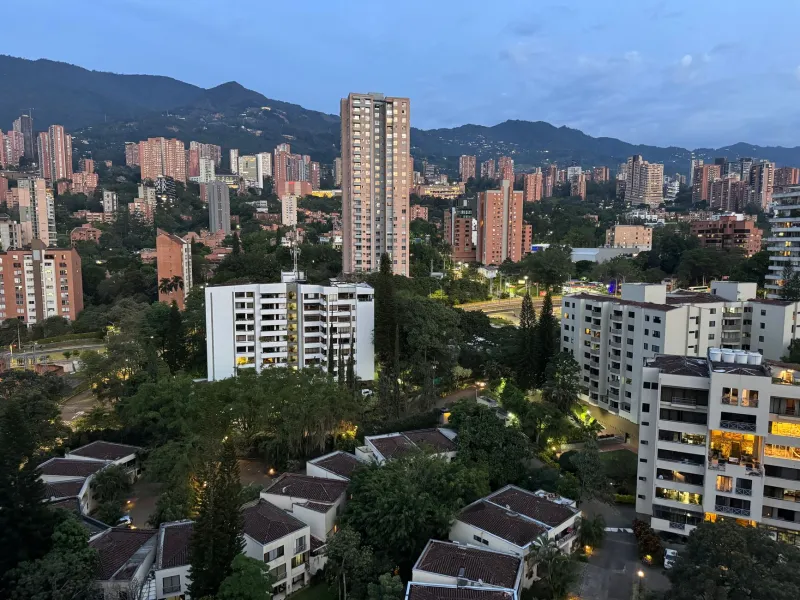
Let's be clear about what actually happened here, because the shorthand version doesn't do it justice. In the 1990s, Medellín was statistically one of the most dangerous cities on earth. That's not dramatic license — that's the recorded reality. And then, through a combination of urban investment, community organizing, political will, and sheer collective stubbornness, the city began to change. Not overnight. Not cleanly. But visibly, measurably, and in ways that left physical marks on the landscape.
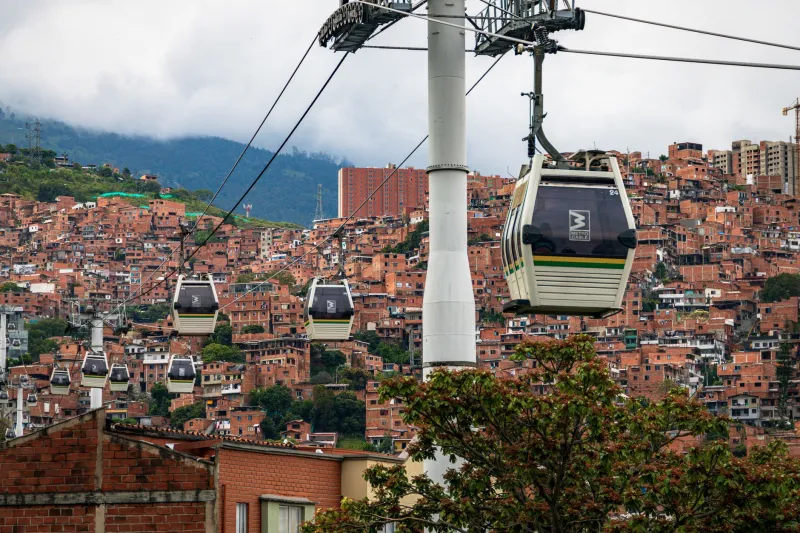
The Metrocable system connected hillside comunas — neighborhoods that had been geographically and economically isolated — to the city center below. The Biblioteca España (before its controversial renovation) became a symbol of public investment in places that had only ever received neglect. Outdoor escalators climbed into communities that infrastructure had previously abandoned. Street art exploded across walls that used to mark territorial boundaries.
For a filmmaker, this is catnip. Real, tangible, photographable evidence of transformation. The problem — and this is where it gets genuinely interesting — is that the transformation is still happening, and the wounds underneath it are still real.
The Ethics of Pointing a Camera at Progress
Here's the tension that serious directors are wrestling with: when you film a city in the middle of healing, who does that serve?
American audiences have an appetite for redemption narratives, but that appetite has a specific shape. We want the arc completed. We want the third act. We want to leave the theater — or close the laptop — feeling like the story is resolved. Medellín refuses that. It's a city where a stunning piece of public architecture can sit two blocks from a neighborhood still navigating generational trauma. Where a tourist takes a selfie in front of a transformation project while a resident a street over is living a reality that doesn't fit the Instagram caption.
Filmmakers who show up looking for a tidy comeback story tend to make bad movies. Or worse — they make movies that feel like promotional content for urban planners while actual residents become set dressing in their own neighborhood's narrative.
The directors getting it right are the ones who sit with that contradiction instead of resolving it. Colombian filmmaker Laura Mora, whose work resists the urge to explain Medellín to outsiders, has talked about the responsibility of filming a city that has been so aggressively interpreted by people who don't live there. That interpretive history — decades of cartel documentaries, narco dramas, and poverty tourism disguised as journalism — casts a long shadow over every camera that points at the city.
What American Audiences Are Actually Hungry For
Here's something worth saying plainly: US audiences are more sophisticated than the industry gives them credit for. The success of films like Roma, Parasite, and more recently Encanto — which, yes, plays with Colombian imagery even in its fantastical framing — suggests that American viewers aren't actually looking for easy answers. They're looking for emotional truth.
And Medellín, precisely because it resists resolution, offers something that manufactured redemption arcs can't: the feeling of watching something real unfold. When a film set in the city's comunas shows a character navigating a neighborhood that is simultaneously more beautiful and more complicated than it was twenty years ago, that tension registers. It doesn't need to be explained. It just needs to be filmed honestly.
The infrastructure itself becomes a kind of character. The cable cars that glide over rooftops aren't just scenic — they're loaded with meaning about who gets access to the city, who got left out for decades, and what it means when a government finally decides a neighborhood deserves investment. A director who understands that can turn a two-second establishing shot into an entire argument about urban inequality without a single line of dialogue.
The Accidental Film Set Problem
There's an unintended consequence to Medellín's transformation that nobody really planned for: the city has become genuinely cinematic in ways that attract the wrong kind of attention.
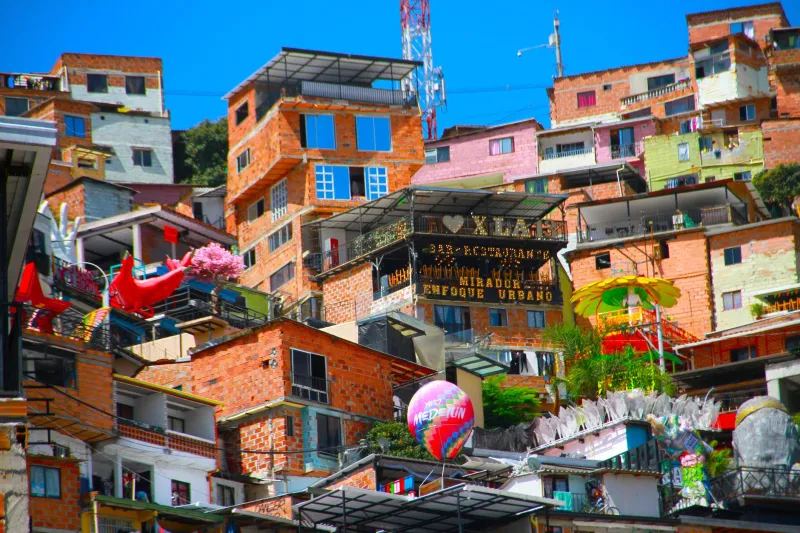
The colorful houses climbing the hillsides. The cable cars cutting across the skyline. The murals. The escalators. The jarring adjacency of gleaming new public spaces and older, rougher streets. It photographs beautifully, and that beauty has started drawing productions that are more interested in the aesthetic than the reality behind it.
This is the accidental muse problem. When a place becomes visually arresting enough to function as a backdrop, it risks being reduced to exactly that — a backdrop. The community's actual lived experience becomes secondary to the composition.
The filmmakers worth paying attention to are the ones who are actively resisting this. Who are casting from within communities. Who are hiring local crews, working with residents as collaborators rather than subjects, and building stories that couldn't be transplanted to a different city without losing their entire meaning. The setting isn't decoration in these films — it's the argument.
Why This Moment Matters for Latin Cinema
Medellín's story is, in some ways, a stress test for what Latin cinema can do when it's operating at its most ambitious. The city presents filmmakers with a genuine ethical and artistic challenge: how do you tell a story about progress without flattening the people who lived through everything that came before it? How do you honor transformation without erasing the pain that made transformation necessary?
The films that are rising to that challenge are quietly building a new visual language for how cities in transition get represented on screen. They're pushing back against the redemption narrative industrial complex — that Hollywood instinct to sand down complexity until it fits a feel-good runtime.
And American audiences, increasingly skeptical of stories that feel engineered to make them feel good, are responding. Not because Medellín is a comfortable story, but because it's a true one.
That's the real comeback. Not the city's — the city was always there, always more than the headlines. The comeback belongs to cinema itself, rediscovering what it looks like to let a place speak for itself.