Honest Lies: The Impossible Balancing Act of Filming a City Still Finding Itself
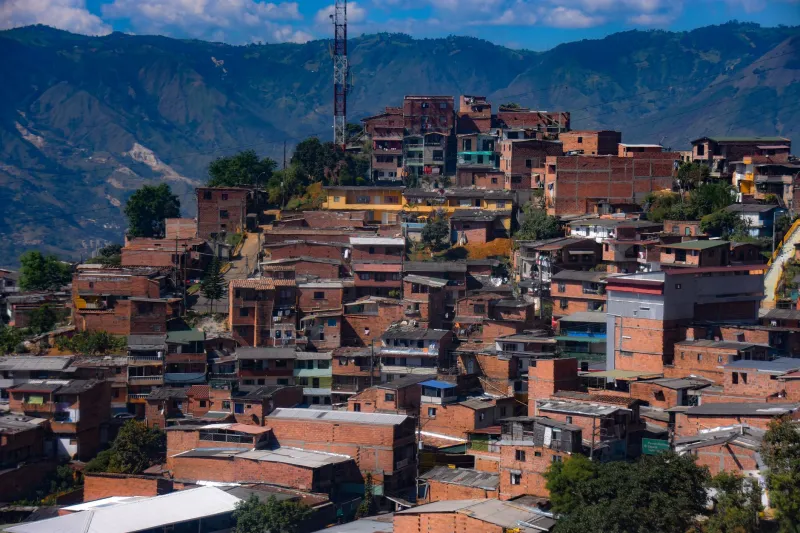
There's a moment in almost every serious film set in Medellín — a beat, usually quiet, where the camera lingers just a second too long on a hillside neighborhood, or a kid kicking a soccer ball past a freshly painted mural, or an elderly woman hanging laundry above a city that used to eat people alive. It's the moment a filmmaker is trying to say: this place is different now. And it's also, almost always, the most dangerous moment in the entire production.
Because here's the thing nobody really wants to say out loud: the more skillfully a film captures Medellín's transformation, the more it risks turning that transformation into a product. And a product can be sold. A product can be distorted. A product can lie with a completely straight face.
The Problem With Getting It Right
Medellín has spent the better part of two decades clawing its way out of a cinematic identity it never asked for. The city that gave the world Pablo Escobar — or more accurately, the city that the world decided was Pablo Escobar — has been trying to complicate that story ever since. New infrastructure, new art scenes, new tech corridors, new filmmakers. The narrative of renewal is real. But narratives, even true ones, can be weaponized.
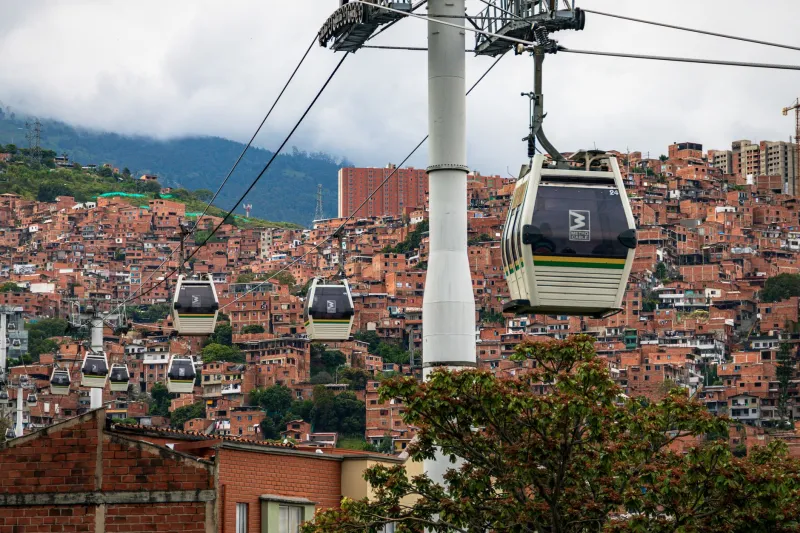
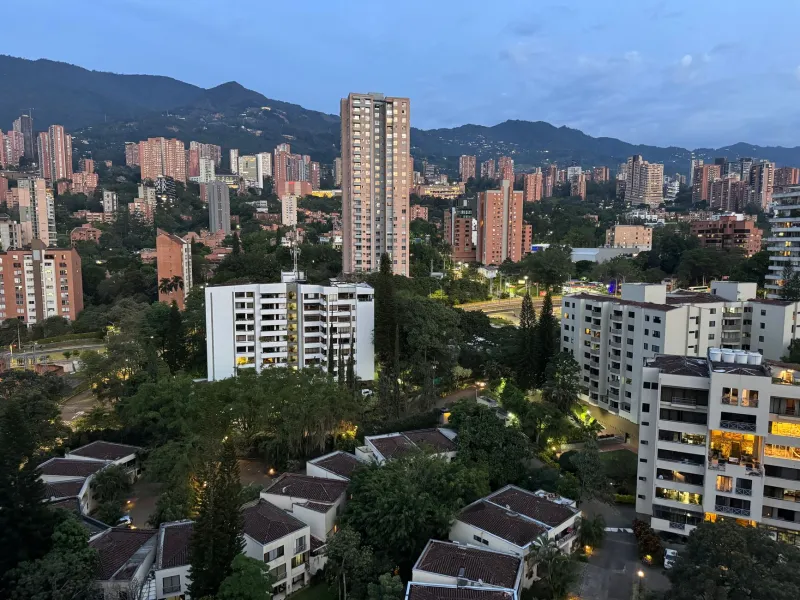
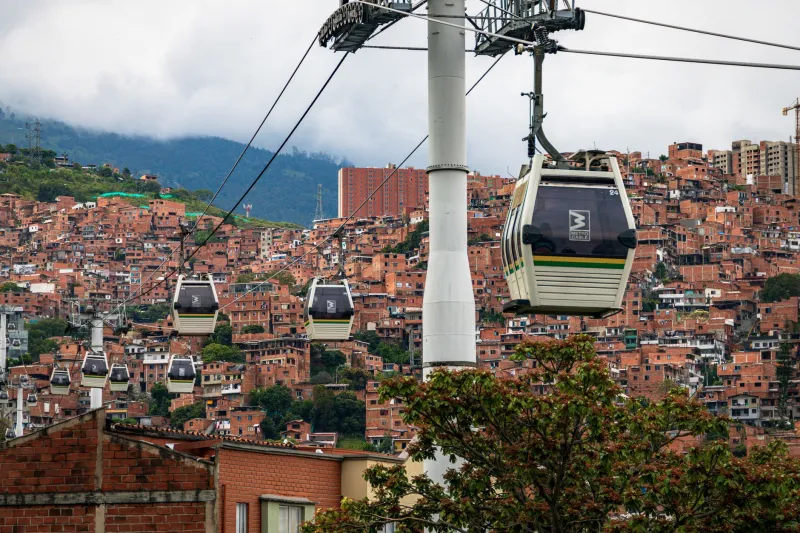
When a production crew rolls into El Poblado or climbs the cable cars into Comuna 13, they're not just choosing a location. They're making an argument. They're saying: look at this place, look at what it became. And that argument, however well-intentioned, carries weight — because it's being made by people with cameras and distribution deals and international audiences who are, let's be honest, still half-expecting someone to get shot.
Cinematographers who've worked extensively in the city describe it as a specific kind of pressure. You're shooting a place that is simultaneously trying to shed its past and acknowledge it — and the camera doesn't always know which one you're doing. A tight shot of a vibrant street market reads as hope. Pull back too far and the hillside slums enter the frame. Now what are you saying?
The Films That Found the Line — And the Ones That Didn't
The productions that have handled this most honestly tend to share a common quality: they resist the urge to make Medellín mean something clean. Los Nadie (2016), Jorge Durán's lo-fi portrait of punk youth in the city's margins, doesn't bother with the transformation narrative at all. It just shows kids existing — messy, funny, broke, alive — in a city that the film treats as a place rather than a symbol. There's no redemption arc for the city itself, because the city isn't the protagonist. The result feels more truthful than a dozen slicker productions that tried harder.
Contrast that with some of the international co-productions that have used Medellín as backdrop over the past several years — the ones that cast the city's cable cars and street art as visual shorthand for resilience without ever engaging with what resilience actually costs. These films aren't lying exactly. The cable cars are real. The murals are real. But they're using authenticity as décor, which is its own kind of fiction.
Producers who've navigated both approaches talk about the difference in terms of whose story is being centered. When a production imports its narrative and drops it onto Medellín's streets, the city becomes a set. When the story grows from inside the city — from its own filmmakers, its own writers, its own understanding of its contradictions — something different happens. The camera stops explaining and starts listening.
The Ethics of the Exterior Shot
There's a specific conversation happening right now among Colombian filmmakers about what they call the mirada turística — the tourist gaze. It's the visual language of discovery, of a camera encountering something for the first time and narrating that encounter for an audience assumed to be equally uninitiated. It's not malicious. It's often beautiful. And it almost always gets Medellín slightly wrong.
The tourist gaze turns the city's complexity into a series of contrasts: the old violence against the new hope, the poverty against the innovation, the darkness against the light. These contrasts are real, but flattened into a visual grammar, they start to feel like a TED Talk. And Medellín has had enough TED Talks.
What the most honest recent productions have figured out is that the city's transformation isn't a story with a clear arc. It's ongoing, uneven, and contested. Neighborhoods that look revitalized on camera are still dealing with displacement. Murals that read as cultural reclamation were sometimes painted over communities that had no say. The cable cars that became a global symbol of urban innovation were also a form of surveillance infrastructure. None of this cancels the progress. But it complicates the postcard.
Shooting in the Space Between
The filmmakers doing the most interesting work in Medellín right now seem to have made peace with the fact that they can't resolve this tension — they can only work inside it. That means resisting the establishing shot that announces the city's reinvention. It means casting from neighborhoods rather than importing faces. It means letting scenes breathe long enough for something unscripted to happen.
It also means being honest about who the film is for. A production aimed squarely at US audiences — even a sympathetic, politically aware one — is making different choices than one made by and for Colombians. Neither is automatically more valid, but they're not the same thing, and pretending otherwise is where the real dishonesty creeps in.
For American audiences engaging with Medellín on film, the ask is actually pretty simple: hold the image loosely. Let the city be more complicated than what any single film can contain. The best Medellín films don't give you the city — they give you an angle on it, a fragment, a question. The ones that claim to give you the whole truth are usually the ones lying hardest.
And that's worth sitting with the next time a camera lingers on that hillside a beat too long, making the whole thing look like it's already been saved.