More Than a Backdrop: How Medellín Became Cinema's Most Complicated Co-Star
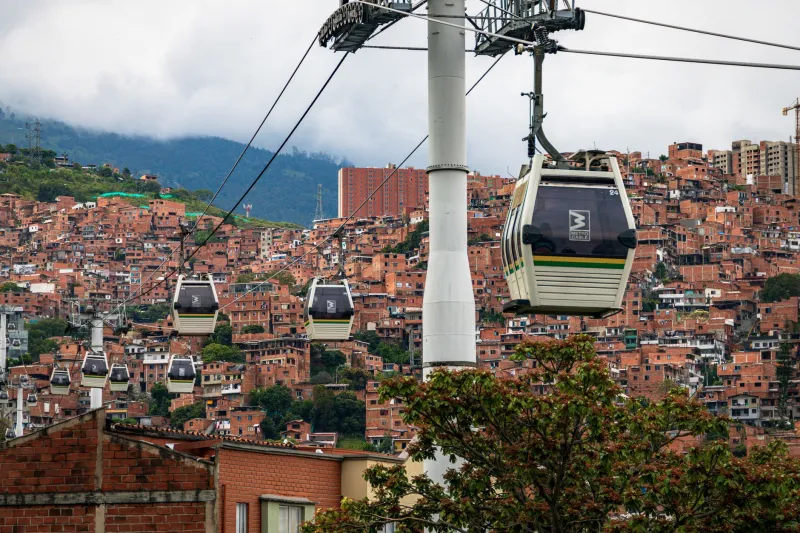
There's a shot that shows up in almost every film set in Medellín. It doesn't matter if the director is Colombian or Canadian, indie or studio-backed. The camera tilts up from the crowded streets of El Centro, climbs past the cable cars threading through the hillside comunas, and lands somewhere in the middle distance — that charged, impossible space between poverty and sky. It's become almost a cliché. Except it never quite is, because the city itself keeps earning it.
Medellín has done something rare in cinema. It hasn't just been filmed. It's been read — over and over, by filmmakers from wildly different traditions — and what's emerged is something that functions less like a setting and more like a fully developed character. A co-star with its own backstory, its own emotional register, and its own demands on the people who try to tell stories inside it.
So how did one Colombian city become one of the most cinematically dense places on the planet? It didn't happen by accident.
The Geography Did Half the Work
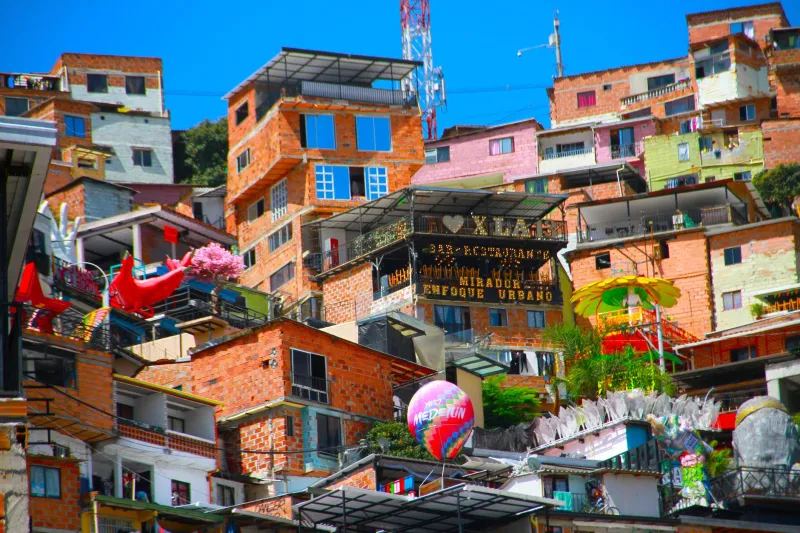
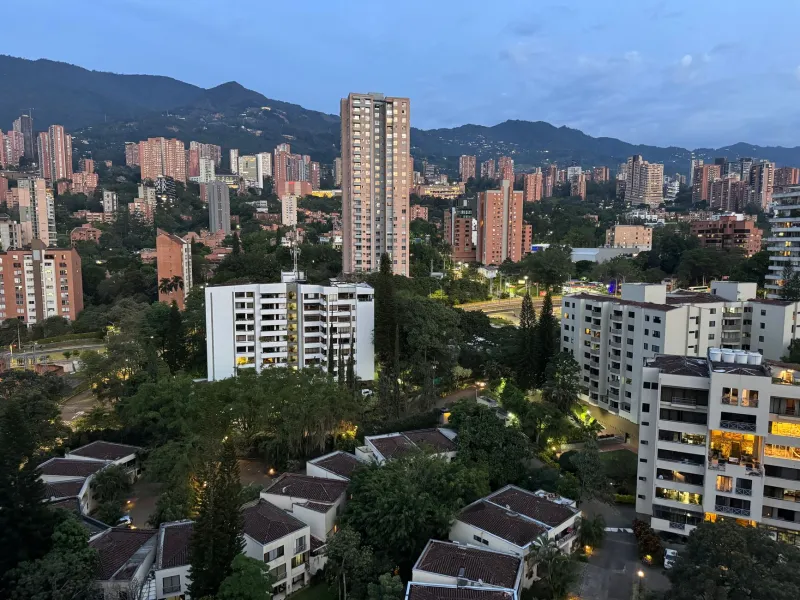
Medellín sits in a valley. That's not a neutral fact — it's a narrative premise. The physical layout of the city, with its flat, wealthier center and its steep, working-class comunas climbing the surrounding hillsides, creates an almost ready-made visual metaphor for class, aspiration, and distance. Directors don't have to construct that tension. They just have to point a camera.
Filmmakers have leaned into this geography so consistently that it's become part of the city's cinematic DNA. The verticality of Medellín — the way power and poverty are literally measured in elevation — shows up across decades of film in ways that would feel heavy-handed if the city weren't actually built that way. When a character rides the Metrocable up into the comunas, it's not just transportation. It's a statement about where the story is willing to go.
Location scouts working in Medellín talk about this in almost mystical terms. The city resists being used as a neutral container. It insists on meaning.
A Visual Language Built Over Decades
The cinematography that's developed around Medellín has some consistent fingerprints. High contrast lighting that plays the perpetual spring-like warmth of the climate against the shadow of tight alleyways. Handheld camera work that mimics the energy of streets that are genuinely, constantly alive. A tendency to let scenes breathe — to let the background do work that dialogue might otherwise carry.
What's interesting is how this visual style has traveled. Colombian directors who developed their craft shooting in Medellín have exported these techniques to projects set elsewhere, and international directors who came to the city for a project often leave with a changed relationship to how they use space and light. The city functions as a kind of film school you didn't know you were attending.
Victor Gaviria, whose unflinching social realism essentially established a template for how to film Medellín's working-class neighborhoods, cast non-professional actors from the comunas themselves — a choice that wasn't just ethical but aesthetic. The rawness it produced became part of the city's cinematic identity. Later filmmakers, even those working in very different genres, kept returning to that quality of realness. Medellín on screen tends to resist the polished.
The Recurring Emotional Touchstones
Beyond the visuals, there are narrative patterns that surface again and again in films set in the city. Coming-of-age stories where the stakes are genuinely life and death. Family structures stretched to their limits by economic pressure and outside violence. The tension between leaving and staying — between the person a character could be somewhere else and the person they are here.
These aren't just Colombian themes. They're universal ones, which is part of why the city keeps attracting directors from outside the country. Medellín offers a specific, fully textured world in which to explore questions that resonate globally. The specificity is the point. The more local and particular the detail, the more emotionally transferable the story.
There's also the question of transformation. Medellín's real-world history — the arc from one of the world's most dangerous cities to a celebrated hub of innovation and urban design — gives any story set there a kind of built-in dramatic structure. The city is always, in some sense, in the middle of becoming something. That's irresistible to storytellers.
What International Directors Borrow (and What They Miss)
Not every filmmaker who comes to Medellín gets it right. There's a version of the city that shows up in international productions where the geography is present but the texture isn't — where the comunas are atmosphere rather than community, and the violence is spectacle rather than consequence. American audiences have seen this version plenty of times, and it's worth naming.
But the more interesting story is what happens when outside directors do the work. When they spend time in the city, collaborate closely with local crews and writers, and let the place actually teach them something. The results tend to have that quality of earned specificity — of a story that could only be set exactly here.
Local producers talk about a shift in how co-productions are being negotiated now. Colombian creative voices are increasingly central rather than consultative, which changes what ends up on screen. The city's own filmmakers are in the room where decisions get made, and the Medellín that emerges from those collaborations is a more complicated, more honest, more cinematically interesting place.
Why Filmmakers Keep Coming Back
At this point, the answer is almost circular in the best way. Filmmakers come to Medellín because other filmmakers came to Medellín. The city has accumulated enough cinematic history that it now references itself. A director who sets a story in the comunas is in conversation with everyone who set a story there before. That's the definition of a living cinematic tradition.
But there's something else, too. Medellín is a city that has survived things that should have broken it, and that survival has produced a culture of extraordinary resilience and creativity. That energy is not metaphorical — it's present on the streets, in the art, in the way people talk about their own city. It gets into the films. It has to.
The camera keeps coming back because the city keeps having more to say. And honestly, at this point, Medellín has earned top billing.