How Medellín Rewrote Its Own Script — And Made the World Watch
There's a version of Medellín that Hollywood built for us. It lived in shadow, in gunfire, in the mythology of one man whose name became synonymous with an entire country's identity. For a long time, that version was the only one most Americans ever encountered. But something shifted — gradually, then all at once — and the city at the center of the Andes began producing its own images, its own narratives, its own cinematic truth. The result hasn't just been good storytelling. It's been a genuine transformation in how Colombia is perceived internationally, with consequences that stretch far beyond the multiplex.
The Weight of a Single Narrative
When a place gets flattened into a symbol, the damage runs deep. Colombia spent the better part of three decades being exported to global audiences as a cautionary tale — a backdrop for thrillers, a setting that signaled danger before a single line of dialogue was spoken. Medellín bore the heaviest load of that reputation. International productions used the city's name like a genre marker. Audiences learned to associate it with a specific aesthetic: low light, corrugated rooftops, men with guns.
What that framing erased was staggering. An entire metropolitan culture of nearly four million people, reduced to its most violent chapter. Filmmakers who grew up in Medellín's barrios, in its universities, in its libraries and music schools, watched their home turned into someone else's set piece. And for a long time, the infrastructure — financial, institutional, cultural — to push back simply wasn't there.
That began to change in the 2000s, slowly at first, as Colombian cinema found its footing with international co-productions and festival recognition. But the shift accelerated dramatically as local directors started insisting on telling stories from the inside out.
Reclaiming the Frame
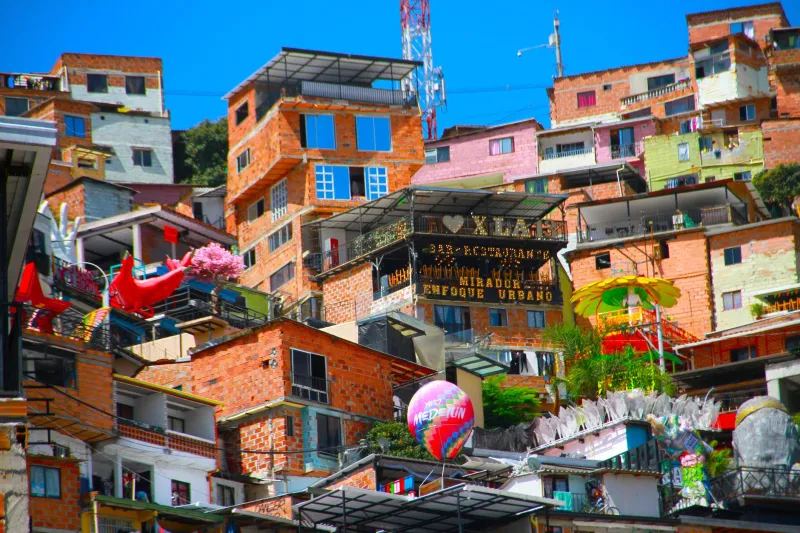
The films that have emerged from this movement don't sanitize Medellín's history. That's what makes them powerful. The best of them sit with the complexity — acknowledging violence and inequality while insisting those aren't the only truths worth telling. They introduce audiences to neighborhoods that feel lived-in rather than staged, to characters whose inner lives are rich and contradictory, to a city that is simultaneously grappling with its past and sprinting toward something new.
Directors working within and around Medellín have increasingly centered stories on ordinary people navigating extraordinary circumstances — not kingpins, not DEA agents, not foreign journalists. The protagonists are mothers, teenagers, artists, mechanics. And that shift in focus has done something measurable: it has created empathy where before there was only spectacle.
Festival circuits took notice. Sundance, Berlin, and Toronto began programming Colombian films not as curiosities but as genuine contenders. That visibility created a feedback loop — more international attention meant more co-production funding, which meant more ambitious projects, which meant even wider audiences.
Tourism, Diplomacy, and the Camera's Quiet Power
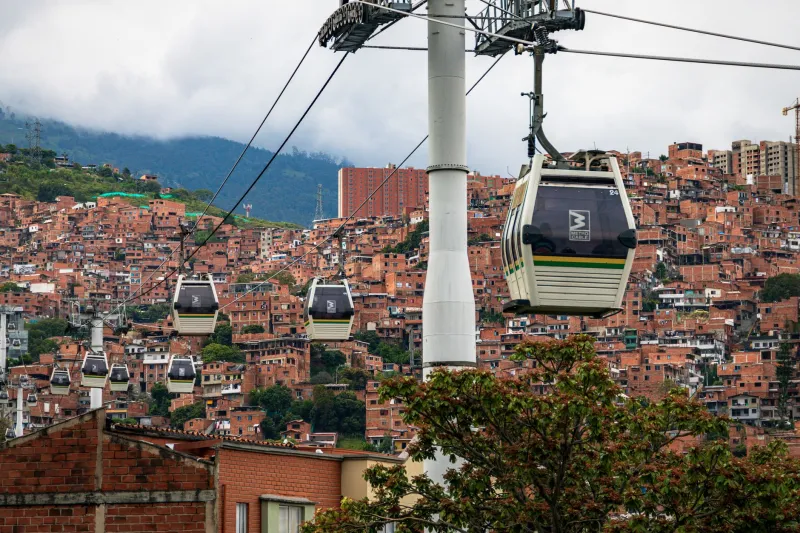
Here's where the story gets genuinely surprising: the cinematic repositioning of Medellín has had documented, real-world economic consequences. Colombia's tourism numbers have climbed significantly over the past decade, and Medellín specifically has become one of Latin America's most visited cities. Travel publications that once would have listed it as a place to avoid now run features on its food scene, its street art, its cable cars and urban innovation.
You can't attribute all of that to film alone — urban renewal projects, improved security, savvy city marketing have all played roles. But cinema functions as a kind of soft-power ambassador that operates at a different frequency than official government campaigns. When someone watches a film that makes them feel something real about a place, the effect lingers in a way that a tourism board ad simply can't replicate.
Cultural diplomacy scholars have started paying attention to this phenomenon. Colombia's international image, measured through global surveys and media sentiment analysis, has improved substantially. And the through-line that keeps appearing in that research is storytelling — specifically, the proliferation of Colombian voices in global media.
The Responsibility That Comes With the Camera
None of this is without tension. As Medellín's cinematic profile rises, new pressures emerge. There's a real risk of trading one flattening narrative for another — swapping the cartel story for an equally simplified transformation story, a city-as-inspirational-arc that papers over ongoing inequalities. The same international attention that amplifies Colombian filmmakers can also distort their incentives, pushing them toward stories that play well abroad rather than stories that resonate authentically at home.
The filmmakers navigating this most successfully seem acutely aware of that trap. They talk openly about the difference between making films about Medellín and making films for Medellín — films that serve their own communities first and let international audiences catch up. That distinction matters enormously. A story told primarily to correct a foreign misconception is still, in some sense, shaped by that misconception. A story told because it needs to exist, because the people in it deserve to see themselves on screen, operates from a completely different place of power.
What Comes Next
The conversation about Medellín's cinematic identity is far from settled. A new generation of filmmakers is coming up in a city that has better infrastructure, more institutional support, and a global audience that is increasingly curious about Latin American stories. The question isn't whether that generation will make films — they already are. The question is whether the international appetite for those films will deepen into genuine engagement or remain at the level of trend-chasing.
What's clear is that the camera has proven to be one of the most effective tools for reshaping perception that Medellín has ever had. Not because film lies — but because, when it's working at its best, it insists on telling the truth. And after decades of watching someone else's version of your city projected back at you, getting to hold the camera yourself turns out to matter enormously. Not just for the image on the screen, but for the city that recognizes itself in it.