Beyond Escobar: The New Wave of Films Giving Medellín Its Real Close-Up
Let's be honest about something. If you asked the average American what they picture when someone says "Medellín," there's a pretty short list of images that come to mind. Narcos. Pablo. Cobblestone alleys at night. A city perpetually stuck in the 1980s, frozen in amber by decades of Hollywood storytelling that found the cartel era endlessly profitable and apparently inexhaustible.
But here's the thing — Medellín moved on. And cinema is finally catching up.
A genuinely exciting wave of films and documentaries has emerged over the last several years, made by both Colombian directors who actually live this city and international filmmakers who've done the work to understand it. Together, they're constructing something rare: a multidimensional portrait of a place that has pulled off one of the most dramatic urban turnarounds in modern history. These aren't redemption narratives designed to make Western audiences feel good. They're something more interesting and more complicated than that.
The City That Reinvented Itself (And Why That's a Cinematic Story)
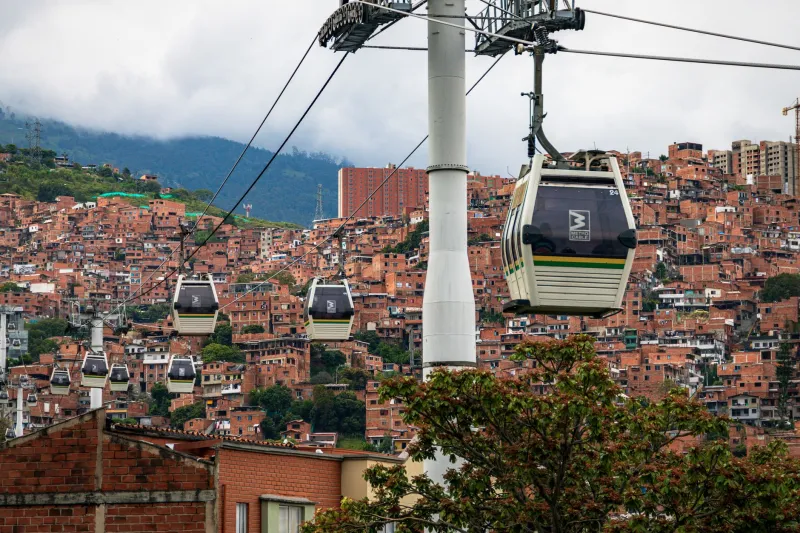
To understand why this cinematic shift matters, you need a quick frame of reference. Medellín was, by virtually every metric, one of the most dangerous cities on Earth in the early 1990s. By the 2010s, it was winning international awards for urban innovation. The city built cable cars into hillside comunas that had been cut off from the rest of the city for generations. It planted libraries in neighborhoods that had only ever seen police. It turned its streets into open-air galleries.
That story — of structural transformation, of community resilience, of a city deciding to be something different — is inherently cinematic. And yet for a long time, the cameras kept pointing backward.
What's changed is who's holding the camera.
Colombian Directors Reclaiming the Frame
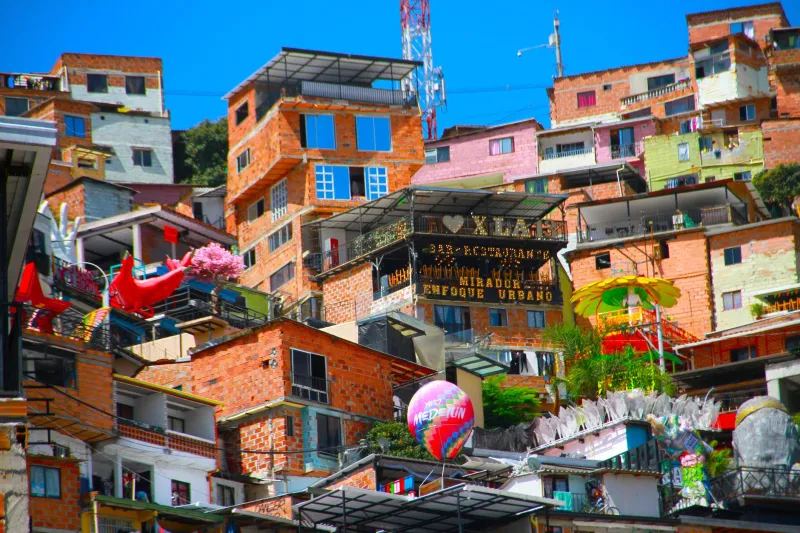
Filmmakers like Rubén Mendoza and the broader generation of directors coming out of Colombia's strengthening film infrastructure have been insistent on shooting the present tense. Colombian productions increasingly center on the textures of contemporary urban life — the street art that blankets entire building facades in El Centro, the tech startups operating out of Laureles, the food scene that's drawing chefs and food writers from New York and Madrid.
Documentaries have been particularly powerful here. Several recent Colombian-produced docs have traced the trajectory of the urbanismo social movement — the philosophy that drove Medellín's transformation — through the eyes of architects, community organizers, and young people who grew up in the communas during the worst years and are now building something different. These films don't erase the past. They contextualize it, which is a fundamentally more honest and more useful thing to do.
What makes these works land differently than outside perspectives is specificity. A director from Medellín knows that the graffiti in Laureles isn't just decoration — it's a decades-long conversation between communities and institutions about who owns public space. That kind of layered local knowledge shows up on screen in ways that tourist-gaze filmmaking simply can't replicate.
International Filmmakers Getting It Right (And Sometimes Wrong)
International co-productions are a mixed bag, and it's worth being clear-eyed about that. Some European and American documentarians have arrived in Medellín with genuine curiosity and produced work that serves the city's complexity. Others have essentially repackaged the same cartel aesthetic with slightly better lighting and called it nuance.
The films that work — and there are genuinely good ones — tend to share a few characteristics. They center Colombian voices, even when a non-Colombian director is behind the camera. They resist the urge to frame everything through a before-and-after lens that positions Western observers as the implicit judges of Medellín's progress. And they find story in the present rather than constantly reaching back to the 1980s as a dramatic anchor.
One area where international filmmakers have added genuine value is in documenting Medellín's tech and innovation ecosystem for global audiences. The city's Distrito de Innovación — a real, functioning hub of startups, design firms, and creative industries — has gotten meaningful screen time in several recent documentary projects, and that coverage has actually shifted how US business media and general audiences think about Latin American cities as sites of innovation rather than just crisis.
Street Art as Protagonist
If there's a single visual motif that defines this new wave of Medellín filmmaking, it might be the murals. The street art culture that has exploded across the city over the last decade isn't just background scenery in these films — it functions almost as a character, a living record of the city's psychological and political evolution.
Several documentary shorts and longer-form projects have taken the art itself as their primary subject, following artists like those from the Casa Kolacho collective in Comuna 13 whose work transformed one of the city's most historically violent neighborhoods into a destination that draws visitors from across Latin America and beyond. These films do something important: they show creativity and community agency as forces of urban change, which is a story that resonates with US audiences in cities wrestling with their own questions about gentrification, public space, and who gets to shape a neighborhood's identity.
Why US Audiences Should Care
Here's the pitch for American viewers who might be wondering whether this all applies to them. The US has its own complicated relationship with cities that have been defined by crisis narratives — Detroit, Baltimore, New Orleans post-Katrina. The question of how places rebuild, who gets to tell that story, and what gets left out in the official version is not an abstract one for a lot of American communities.
Medellín's cinematic reinvention offers a genuinely useful mirror. The films coming out of this moment aren't just interesting as documents of a specific place — they're part of a broader conversation about representation, urban resilience, and the politics of who gets to narrate a city's identity. For US audiences who've consumed decades of Latin American stories filtered through Hollywood's particular anxieties and appetites, encountering Medellín on its own terms is both a corrective and an invitation.
The city has been making its case for years. Cinema is finally making it too.