From Cartel Capital to Cultural Powerhouse: The Films That Let Medellín Tell Its Own Truth
If you grew up in the United States, chances are your first image of Medellín came wrapped in a Netflix thumbnail. A slick narco drama. A charismatic villain. Streets that existed only as a backdrop for violence. That version of the city — frozen in the 1980s and 90s, reduced to a single brutal chapter — became so dominant in American pop culture that it started to feel like the whole story.
It never was.
What's been happening in Colombian cinema over the last two decades is nothing short of a quiet revolution. Filmmakers — many of them born and raised in Medellín — have been systematically reclaiming their city's image, one deeply human story at a time. And the results are reshaping how the world sees not just Medellín, but Latin American cinema as a whole.
The Weight of a Single Narrative
To understand why this shift matters so much, you have to sit with how damaging the old narrative really was. When Narcos dropped on Netflix in 2015, it became a global phenomenon almost overnight. Millions of American viewers binge-watched it, and Medellín's tourism board reportedly saw a spike in visitors who wanted to take cartel tours. Let that sink in. A city of 2.5 million people — a city with world-class architecture, a revolutionary metro system, internationally celebrated street art, and one of the most resilient urban communities on the planet — was being reduced to a trauma tourism destination.
The frustration among Colombians was real and vocal. Writers, directors, and cultural critics pushed back hard. The problem wasn't just that these stories were told — it's that they were told instead of everything else. The cartel narrative crowded out the room.
Cinema, it turned out, was the most powerful tool available to change that.
A New Lens on the City
The shift didn't happen overnight, and it didn't come from a single landmark film. It was cumulative — a body of work that slowly but steadily built a more complete portrait of Medellín and its people.
Take Los Colores de la Montaña (The Colors of the Mountain, 2010), directed by Carlos César Arbeláez. Set in a rural Colombian village caught in the crossfire of armed conflict, the film follows children trying to retrieve a soccer ball that's landed in a minefield. It's devastating and tender in equal measure. Crucially, it centers childhood, play, and community — not traffickers. The violence in the film is real, but it's contextualized within lives that are full of love and meaning. American audiences who caught it on the festival circuit were often surprised by how emotionally complex it was, precisely because it defied every expectation they'd brought with them.
Then there's Embrace of the Serpent (2015) by Ciro Guerra — a film that didn't come from Medellín specifically but represented a seismic moment for Colombian cinema on the world stage. Its Academy Award nomination for Best Foreign Language Film put Colombian storytelling in front of American audiences who'd never considered looking beyond the narco genre. It proved that Colombian directors could command international prestige on their own artistic terms.
Medellín as Character, Not Crime Scene
What the best of these films do — and what separates them from the outsider gaze of Hollywood productions — is treat Medellín itself as a living, breathing character rather than a crime scene backdrop.
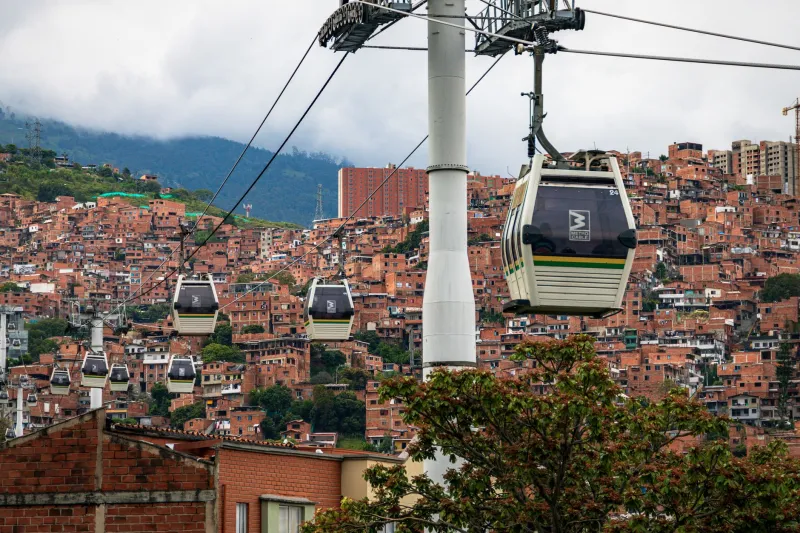
Films shot and set in the city's iconic comunas (the hillside neighborhoods that were once synonymous with violence) now show these communities as places of extraordinary creativity. The cable cars that transformed those neighborhoods into connected parts of the city aren't just set dressing — they're symbols of what urban ingenuity and political will can accomplish. When filmmakers from Medellín put those cable cars on screen, they're making an argument about their city's future, not just documenting its past.
Documentaries have played a particularly vital role here. International doc filmmakers who've taken the time to embed themselves in Medellín's communities have produced work that genuinely complicates the American viewer's assumptions. These films introduce us to urban planners, hip-hop artists, graffiti muralists, educators, and tech entrepreneurs — people who are actively building something new. That's a far cry from the two-dimensional city Americans thought they knew.
The Hollywood Problem (And Its Limits)
It would be unfair to say that every American or international production set in Medellín has been irresponsible. Some have made genuine efforts to hire Colombian talent both on and off screen, to consult with community members, and to present the city with nuance. But the commercial pressures of English-language entertainment still tend to pull toward the sensational. Conflict sells. Complexity takes longer to explain.
That's precisely why Colombian-led productions matter so much. When the people making the film are from the city — when they grew up in its neighborhoods, when their families lived through the violence and the rebuilding — the storytelling carries a different kind of authority. It's not that outside perspectives are inherently invalid. It's that they're incomplete without the inside view.
The growing infrastructure of Colombian film — bolstered by government investment in the arts, international co-productions, and the rise of streaming platforms hungry for non-English content — means more of those inside-view stories are getting made and distributed than ever before.
What Comes Next
The most exciting thing about Medellín's film renaissance isn't any single movie. It's the generation of young filmmakers it's producing — storytellers who grew up watching the city transform, who have complicated feelings about both its trauma and its triumph, and who are bringing those contradictions to the screen with real sophistication.
For American audiences, engaging with this cinema is an invitation to update a mental image that's been frozen for too long. Medellín isn't a cautionary tale. It's a city in the middle of writing its own future — and its filmmakers are making sure the world gets to read it.
That's a story worth watching.