5 Latin American Films That Are Quietly Rewriting Hollywood's Rulebook

There's a moment happening right now in cinema where the margins are becoming the center. Spanish-language films aren't just winning awards in the international categories anymore — they're shifting the conversation about what movies can do, what stories deserve big-screen treatment, and whose perspective has been missing from the frame all along.
For US audiences who've been conditioned to reach for the remote when subtitles appear, consider this your intervention. These five films don't just represent great Latin American cinema. They represent great cinema, full stop — and they're actively changing how American critics, studios, and viewers think about the region's storytelling.
1. The Kings of the World (Los reyes del mundo) — Colombia, 2022
Director: Laura Mora
If you want to understand what Colombian cinema looks like when it escapes the gravitational pull of cartel mythology, start here. Laura Mora's road movie follows five displaced men traversing rural Colombia to claim a piece of land promised under a peace agreement — and it is, without exaggeration, one of the most visually stunning films of the last decade.
Mora doesn't rush anything. She lets her characters breathe, wander, and exist in landscapes that feel both timeless and acutely present. There's no villain with a gold-plated pistol. No DEA agent with a moral crisis. Just five human beings navigating a country still processing its own wounds.
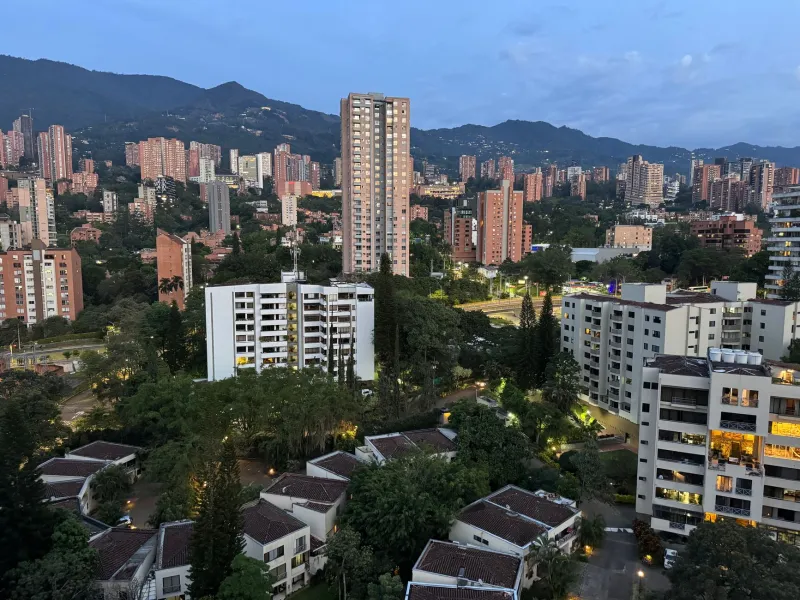
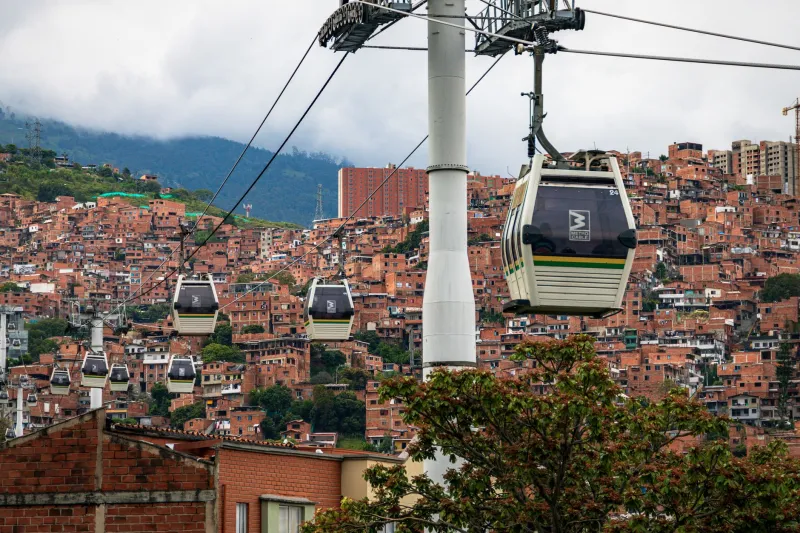
The film won the Golden Shell at San Sebastián — Spain's most prestigious film festival — and it's the kind of win that carries weight beyond the trophy. It signals that international audiences are ready for Colombian stories that don't come pre-packaged in narco-drama tropes. For anyone who's watched Medellín get flattened into a crime backdrop for the hundredth time, The Kings of the World is genuinely cathartic.
Why it matters for US audiences: It directly challenges the dominant image of Colombia that American media has exported for 30 years — and replaces it with something far more truthful and far more interesting.
2. Roma — Mexico, 2018
Director: Alfonso Cuarón
Okay, yes — Roma is no longer a secret. But its impact on how Hollywood perceives Spanish-language film continues to ripple outward in ways worth examining. When Alfonso Cuarón's black-and-white, dialogue-driven memory film about a domestic worker in 1970s Mexico City won the Academy Award for Best Director and Best Foreign Language Film, it didn't just make history. It broke something open.
Before Roma, the conventional wisdom in Hollywood was that non-English films with no stars, no genre hooks, and no action sequences couldn't compete at the highest levels. Roma obliterated that assumption. It also — and this is crucial — centered an Indigenous Mexican woman as its protagonist in a way that mainstream Mexican cinema had historically failed to do.
The film's success on Netflix demonstrated that streaming audiences would engage seriously with slow, contemplative, subtitled cinema when the storytelling was strong enough. That lesson has quietly influenced how platforms greenlight Latin American content ever since.
Why it matters for US audiences: It permanently changed the conversation about what "awards-worthy" cinema can look like — and who it can be about.
3. I'm No Longer Here (Ya no estoy aquí) — Mexico, 2019
Director: Fernando Frías
This one flew under the radar for many US viewers despite an Academy Award nomination, and that's a genuine shame. Fernando Frías's film follows a teenage boy from Monterrey who leads a youth subculture built around a slowed-down cumbia music style, gets caught up in gang conflict, and ends up as an undocumented immigrant in New York — longing for a home he can't safely return to.
What makes I'm No Longer Here remarkable is its specificity. It's not a generic immigration story or a generic gang story. It's a film about a very particular subculture — the cholombiano movement — that most American audiences (and frankly, most Mexican audiences outside Monterrey) knew nothing about. Frías treats this subculture with the same seriousness a filmmaker might bring to a story about jazz musicians or punk rockers.
The result is a film that expands the definition of what Latin American youth stories can look like on screen — moving well beyond the familiar archetypes of the struggling immigrant or the gang member with no interiority.
Why it matters for US audiences: It reframes the immigration narrative around cultural identity and loss rather than political utility, which is both more honest and more emotionally resonant.
4. Monos — Colombia/Argentina, 2019
Director: Alejandro Landes
If you want to see what happens when Latin American filmmakers take on genre filmmaking on their own terms, Monos is your film. This Colombian-Argentinian co-production — about a group of teenage guerrilla soldiers guarding an American hostage in the mountains — is part war movie, part Lord of the Flies, part fever dream.
It's also genuinely unlike anything Hollywood has produced. The film refuses easy moral frameworks. The teenage soldiers are terrifying and sympathetic in equal measure. The American hostage is neither savior nor symbol. The jungle setting becomes almost a character itself — beautiful and suffocating.
Monos was Colombia's submission for the Academy Awards and earned rapturous reviews from US critics who weren't quite sure what to do with it — which is kind of the point. It doesn't fit the mold, and it's not trying to.
Why it matters for US audiences: It demonstrates that Latin American filmmakers can take on high-concept genre premises and produce something more formally adventurous than most Hollywood equivalents.
5. Identifying Features (Sin señas particulares) — Mexico, 2020
Director: Fernanda Valadez
This one hits differently. Fernanda Valadez's debut feature follows a mother searching for her son who disappeared trying to cross the US-Mexico border — and it's one of the most quietly devastating films you'll see.
What sets Identifying Features apart from other border-crossing narratives is its refusal to sensationalize. Valadez shoots the Mexican landscape with a painter's eye, and she lets grief accumulate slowly, the way it actually does. The film won the World Cinema Grand Jury Prize at Sundance 2020, putting a first-time Mexican female director on the international map in a significant way.
In a media environment where the US-Mexico border is endlessly politicized, this film insists on the human scale of that story — one family, one disappeared son, one mother who keeps moving forward because what else do you do.
Why it matters for US audiences: It offers American viewers a perspective on the border that no cable news segment or political speech ever will — and it does so through the language of cinema at its most precise.
The Bigger Picture
What connects these five films isn't geography or language — it's ambition. Each one is made by a filmmaker who refused to shrink their story to fit somebody else's expectations. That kind of creative confidence is exactly what's driving the Latin American cinema renaissance, and it's exactly what's making Hollywood pay attention.
For US audiences, the invitation is simple: lean into the subtitles. The stories on the other side are worth it.