Rooted and Rolling: How Medellín's Film Schools Are Building Latin Cinema From the Ground Up
For decades, the path for a serious Latin American filmmaker looked something like this: study locally if you had to, then pack your bags and head north. Los Angeles, New York, maybe Barcelona if you were feeling European. The assumption was that real film education — the kind that launched real careers — lived somewhere else. Medellín, for most of the 20th century, wasn't exactly on the syllabus.
That story is changing. And it's changing faster than most people outside Colombia realize.
A City That Decided to Invest in Its Own Voice
Medellín has spent the better part of two decades rebranding itself — not through PR campaigns, but through infrastructure. Innovation districts, public libraries, urban cable cars. The city made a deliberate bet on culture as a tool for transformation, and film education eventually became part of that wager.
Institutions like the Universidad de Antioquia and Pascual Bravo have expanded their audiovisual and communication programs, while newer creative academies have filled the gaps with more hands-on, industry-facing curricula. Workshops tied to the Medellín International Film Festival have given emerging filmmakers direct access to working professionals. The ecosystem isn't just growing — it's starting to feel like a genuine pipeline.
What makes this different from a standard film school expansion isn't the equipment or the course catalogs. It's the philosophy baked into how these programs are run. Students aren't being trained to replicate Hollywood grammar. They're being pushed to interrogate their own surroundings, to ask what stories exist right outside the window, and to build a visual language capable of holding those stories without apology.
Staying Put as a Political Act
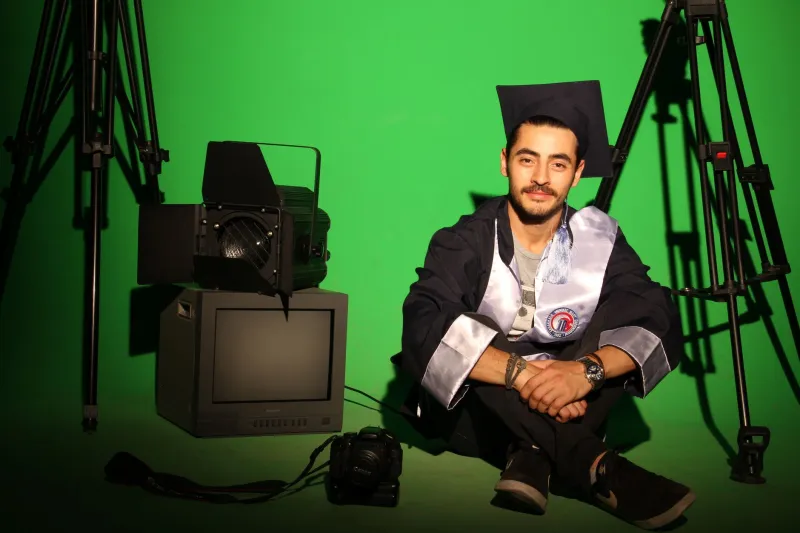
Here's the part that doesn't get enough attention: a growing number of graduates from these programs are choosing not to leave. That's not a small thing. For a country that has historically exported talent as fast as it developed it, retention is a quiet revolution.
The reasons are layered. Streaming platforms have made it genuinely possible to build an international audience without relocating to be near one. Colombian co-production treaties with Spain, France, and other countries have opened funding channels that didn't exist a generation ago. And there's something harder to quantify — a sense that Medellín itself is a subject worth staying for. The city is mid-transformation, full of contradiction, and cinematically alive in a way that rewards the filmmaker who knows it from the inside.
When a director grows up riding the Metrocable, when they've watched their neighborhood shift from fear to something more complicated and hopeful, they carry a kind of knowledge that can't be imported. The film schools here seem to understand that. The best ones are teaching students to treat that knowledge as an asset rather than a limitation.
What the Curriculum Actually Looks Like
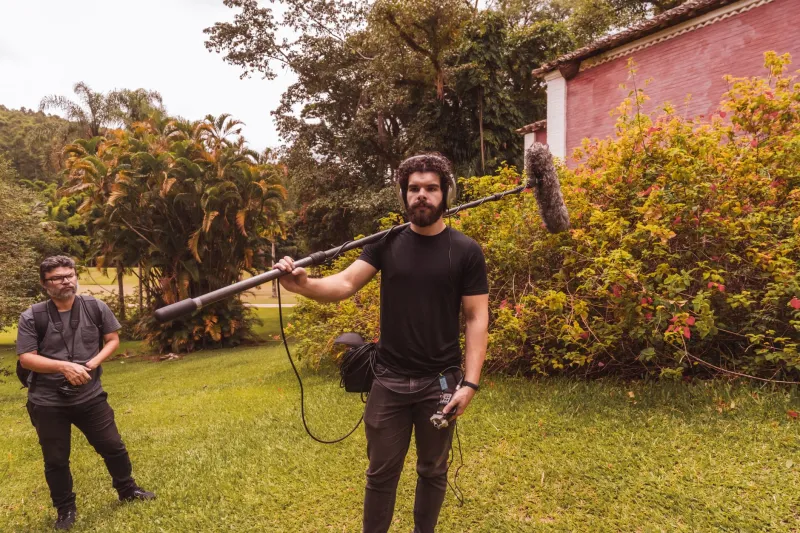
It varies, but some consistent threads are worth noting. Documentary traditions run deep in Colombian film education — partly because documentary has always been the genre most willing to look directly at social reality, and Medellín has plenty of that. Students learn early to work with non-actors, to build trust with communities, to handle the ethics of representation with care. That training bleeds into fiction work in interesting ways. You can feel it in the texture of Colombian films that have broken through internationally — a groundedness, a refusal to aestheticize poverty or violence without consequence.
There's also a growing emphasis on production practicality. How do you actually get a film made in a country where budgets are tight and infrastructure is still developing? Students learn to be resourceful in ways that, paradoxically, often produce more creative results than bigger-budget productions. Constraints become a kind of craft.
And increasingly, these programs are building connections — to each other, to festivals, to international co-production networks. The isolation that once defined regional filmmaking is being replaced by something more networked and collaborative.
The Ripple Effect on Latin American Cinema
Zoom out a little and the implications get bigger. When Medellín produces filmmakers who stay in Medellín, it isn't just good for one city. It seeds a model. Bogotá, Cali, Cartagena — cities across the region are watching. So are film programs in Mexico, Peru, Argentina. The question of whether Latin American cinema can sustain itself as a self-directed creative industry, rather than a feeder system for more powerful entertainment economies, is genuinely open. What happens in Medellín's classrooms is part of that answer.
For US audiences who've been discovering Latin American cinema through streaming — whether it's a Colombian thriller on Netflix or a documentary that showed up in their festival queue — this matters. The films that feel most alive, most specific, most impossible to replicate are almost always the ones made by people who stayed close to their source material. Film schools that encourage that rootedness are, in a real sense, protecting the quality of what eventually reaches American screens.
The Unfinished Story
None of this is a done deal. Funding for arts education in Colombia remains inconsistent. The brain drain hasn't stopped entirely — it's just facing more competition from reasons to stay. And the tension between developing a distinctive local voice and building the kind of international profile that sustains a career is real, and not easily resolved in a classroom.
But the direction of travel feels different than it did even ten years ago. There's a confidence in Medellín's film culture that wasn't always there — a sense that the city has stories worth telling and is increasingly capable of telling them on its own terms.
The next generation of Latin American cinema isn't just being imagined in Medellín. In a lot of ways, it's being built there, one graduating class at a time.